

close
Choose Your Site
Global
Social Media

Views: 0 Author: Site Editor Publish Time: 2025-09-05 Origin: Site


In today’s industrial landscape, machinery is expected to operate efficiently and reliably under demanding conditions. Among the essential components of many systems are electric motors, which drive pumps, conveyors, fans, compressors, and countless other applications. For industries where environmental factors such as moisture, chemicals, or extreme temperatures are present, the durability of these motors becomes a critical concern. Stainless-steel NEMA motors have emerged as a solution to these challenges, offering exceptional corrosion resistance and long-lasting performance. This article explores the key benefits of stainless-steel NEMA motors, explaining why they are increasingly preferred in demanding industrial environments.
Before delving into the advantages of stainless-steel construction, it is important to understand what NEMA motors are. NEMA stands for the National Electrical Manufacturers Association, an organization that sets standards for electrical equipment in the United States. NEMA motors are designed according to these standards, which define specifications such as frame sizes, mounting arrangements, voltage ratings, and performance characteristics. This standardization ensures compatibility, reliability, and predictable performance across different applications.
NEMA motors are widely used in industrial, commercial, and municipal applications. They are known for their robust design, energy efficiency, and adaptability to various operating conditions. However, when traditional motors are exposed to harsh environments—such as high humidity, saltwater, or corrosive chemicals—their performance and lifespan can be compromised. This is where stainless-steel NEMA motors offer a clear advantage.
Corrosion is one of the primary challenges in maintaining industrial equipment. It occurs when metal components react with environmental elements like oxygen, water, or chemicals, leading to rust, pitting, and eventual structural weakening. In electric motors, corrosion can compromise the integrity of the housing, shaft, and internal components, potentially causing mechanical failure and electrical hazards.
Stainless steel is highly resistant to corrosion due to its composition, which includes a minimum of 10.5% chromium. Chromium forms a thin, invisible layer of chromium oxide on the surface of the metal, effectively protecting it from oxidation and chemical attack. This property is particularly valuable in industries such as food processing, chemical manufacturing, wastewater treatment, and marine operations, where equipment frequently comes into contact with moisture, corrosive chemicals, or salty environments.
By using stainless steel for motor housings, shafts, and other exposed components, manufacturers can significantly reduce the risk of corrosion-related failures. This not only improves operational reliability but also reduces the need for frequent maintenance, downtime, and costly replacements.
One of the most compelling reasons to choose stainless-steel NEMA motors is their extended lifespan. Traditional motors made from cast iron or aluminum may degrade faster in harsh environments, leading to frequent replacements and increased operational costs. Stainless steel, on the other hand, maintains its structural integrity even under continuous exposure to challenging conditions.
The longevity of stainless-steel motors is particularly beneficial in industries where equipment downtime can result in significant financial losses. For example, in water treatment plants or chemical processing facilities, a motor failure can halt production and disrupt critical operations. By investing in stainless-steel NEMA motors, companies can ensure continuous performance and minimize the risk of unexpected downtime.
Moreover, stainless-steel motors are designed to withstand not only corrosion but also mechanical wear. The combination of robust construction and corrosion resistance allows these motors to operate efficiently for many years, providing a reliable solution for demanding industrial applications.
Another advantage of stainless-steel NEMA motors is their suitability for hygienic environments. In industries such as food processing, pharmaceuticals, and beverage manufacturing, equipment must be easy to clean and resistant to contamination. Stainless steel’s smooth surface and resistance to corrosion make it ideal for these applications.
Unlike painted or coated motors, which may chip or degrade over time, stainless-steel motors maintain a clean surface that does not harbor bacteria or other contaminants. They can withstand frequent washdowns, high-pressure cleaning, and exposure to sanitizing chemicals without compromising performance. This makes stainless-steel NEMA motors a preferred choice in industries where hygiene and cleanliness are critical.
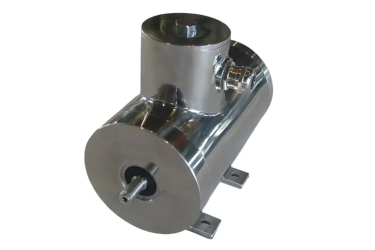
In addition to corrosion resistance, stainless-steel motors exhibit superior performance in extreme temperature conditions. Stainless steel can withstand both high heat and cold without significant deformation or loss of mechanical properties. This makes these motors suitable for environments such as chemical reactors, furnaces, and outdoor installations in regions with harsh winters or intense summer heat.
The ability to operate in a wide temperature range enhances the versatility of stainless-steel NEMA motors. Companies can deploy the same motor model across different applications and environments without worrying about material degradation or performance loss. This flexibility can simplify inventory management and reduce procurement costs.
While stainless-steel motors may have a higher upfront cost compared to traditional motors, their long-term benefits often justify the investment. The durability, reduced maintenance, and extended lifespan of stainless-steel NEMA motors result in lower total cost of ownership. Companies save on replacement parts, labor costs, and production downtime, making these motors a cost-effective choice in the long run.
Additionally, the corrosion resistance of stainless steel reduces the need for protective coatings or regular inspections, further lowering maintenance expenses. In environments where motor failure could have serious safety or financial consequences, the reliability of stainless-steel motors offers peace of mind and measurable economic benefits.
Stainless-steel NEMA motors are used in a wide range of industries due to their durability and adaptability. Some common applications include:
Food and Beverage Processing: Stainless-steel motors meet stringent hygiene standards and resist corrosion from cleaning agents, acidic foods, and moisture.
Chemical and Pharmaceutical Industries: Motors are exposed to corrosive chemicals and require reliable performance in critical processes.
Water and Wastewater Treatment: Continuous exposure to moisture and chemicals demands corrosion-resistant motors for pumps and aeration systems.
Marine and Offshore Operations: Saltwater environments are highly corrosive, making stainless-steel motors essential for ships, docks, and offshore platforms.
Outdoor Industrial Equipment: Motors in outdoor applications face rain, humidity, and temperature fluctuations, where stainless steel provides long-term durability.
The versatility of stainless-steel NEMA motors demonstrates their ability to meet diverse industrial needs while maintaining reliable performance.
In addition to operational advantages, stainless-steel motors offer environmental and safety benefits. Corrosion-resistant motors are less likely to leak oils or chemicals due to structural degradation, reducing the risk of environmental contamination. Furthermore, the reliability of these motors minimizes unexpected failures that could pose safety hazards to personnel.
Stainless steel is also fully recyclable, aligning with sustainable manufacturing practices. Companies adopting stainless-steel motors contribute to environmental conservation while benefiting from durable and safe equipment.
Stainless-steel NEMA motors represent a significant advancement in industrial motor technology, offering unparalleled corrosion resistance, longevity, and reliability. Their ability to withstand harsh environments, maintain hygiene standards, resist extreme temperatures, and reduce long-term maintenance costs makes them an ideal choice for industries ranging from food processing and pharmaceuticals to chemical manufacturing and marine operations.
Investing in stainless-steel NEMA motors is not just a decision for today’s efficiency—it is a long-term strategy for minimizing downtime, enhancing operational safety, and ensuring consistent performance in challenging industrial settings. With their combination of durability, versatility, and cost-effectiveness, stainless-steel NEMA motors continue to set the standard for reliable and resilient industrial equipment.


