

close
Choose Your Site
Global
Social Media

Views: 0 Author: Site Editor Publish Time: 2026-02-25 Origin: Site


When selecting a DC brushless gear motor (BLDC), it's essential to choose the right gear system that matches your load profile, torque requirements, and efficiency demands. Two common gear types used in BLDC motors are planetary gear motors and spur gear motors. Each offers distinct advantages and is suitable for different applications. In this article, we will compare these two types of motors in terms of their design, performance, size flexibility, durability, and maintenance requirements. Understanding these differences can help you make an informed decision when selecting the best motor for your specific load profile.
A planetary gear motor uses a unique gear arrangement in which one or more gears (planet gears) rotate around a central gear (the sun gear). This configuration is enclosed within a ring gear that surrounds the entire setup. The motor shaft is connected to the sun gear, and the planet gears transmit torque to the output shaft. This design allows for a high torque-to-size ratio, making planetary gear motors ideal for applications where space is limited but power requirements are high. The multiple gear stages distribute the load evenly across the gears, significantly improving efficiency and reducing wear.
This structure also offers a highly efficient force distribution, as multiple gears share the torque load, which enhances the motor's overall performance. As a result, planetary gear motors excel in demanding applications where consistent and reliable torque is essential, especially at lower speeds.
Planetary gear motors are commonly used in high-torque, low-speed applications where compactness, efficiency, and durability are crucial. These motors are found in various industries, such as robotics, industrial machinery, automation systems, medical devices, power tools, and aerospace. Their ability to generate high torque while maintaining a low profile makes them the perfect choice for applications that demand both high performance and space-saving designs.
Some advantages of planetary gear motors include:
High torque output with a smaller size
Smooth operation with minimal vibration and noise
Better efficiency at high torque levels
Longer lifespan due to reduced mechanical stress and friction between gears
These features make them highly suitable for demanding applications where space is at a premium but high performance, reliability, and efficiency are required. Whether used in robotic arms, conveyors, or medical equipment, planetary gear motors provide a robust and efficient solution for high-torque applications.
A spur gear motor uses a simple gear system where the gears have straight teeth that engage directly with each other. The gears rotate on parallel shafts, and the input shaft drives the output shaft through direct contact. Spur gears are the most common gear type and are straightforward in design, making them cost-effective.
Spur gear motors are generally larger than planetary gear motors due to their less compact design, but they are still highly effective in certain scenarios. The gear teeth mesh directly, which may create more noise and vibrations compared to planetary systems.
Spur gear motors are widely used in low-to-medium torque applications where cost-effectiveness and simplicity are more important than space constraints or high performance. These motors are found in applications such as conveyor belts, small machinery, and electric vehicles.
Some benefits of spur gear motors include:
Simplicity in design
Lower cost
Efficient in low torque, high-speed applications
However, they are not as efficient or durable in high-torque, low-speed applications compared to planetary gear motors.
When choosing between a planetary gear motor and a spur gear motor, it’s important to evaluate their performance characteristics, especially concerning torque, speed, and efficiency. The following table highlights key differences in performance:
Feature | Planetary Gear Motor | Spur Gear Motor |
Torque Handling | High torque capability, ideal for heavy loads | Limited torque handling, better for light loads |
Speed | Low speed with high torque output | Higher speed, suitable for less demanding applications |
Efficiency | High efficiency, especially at high torque | Moderate efficiency, prone to energy losses at high loads |
Noise Levels | Quiet operation, minimal vibration | Noisier, with higher vibration levels |
Size and Compactness | Compact design for space-limited applications | Larger, bulkier design |
Planetary gear motors provide higher torque at lower speeds, making them ideal for high-torque, low-speed applications. They can handle significantly higher loads without compromising performance. In contrast, spur gear motors are better suited for applications where higher speed is needed but with lower torque.
Planetary gear motors are more efficient in converting input energy to mechanical power due to the multi-stage gearing that evenly distributes the load across multiple gears. On the other hand, spur gear motors may experience energy loss due to friction, especially at higher loads, resulting in lower efficiency.
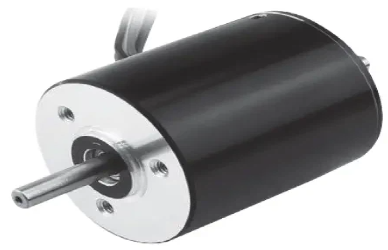
Planetary gear motors are generally more compact than spur gear motors, making them a better choice for applications with space constraints. The multi-gear arrangement in planetary motors allows them to deliver high torque without occupying as much space as a spur gear system.
In contrast, spur gear motors have a simpler design but tend to be bulkier because they require a larger gear to handle the same torque output. This makes planetary gear motors a better choice in applications where size is a limiting factor.
Both types of gear motors offer customization options for specific applications, but planetary gear motors are more versatile in adapting to various load requirements. Spur gear motors, due to their simpler design, are typically more rigid in terms of customization and are generally used for specific, less demanding tasks.
Planetary gear motors are known for their longer lifespan and superior durability because the load is distributed evenly across multiple gears, reducing wear and tear. This efficient load distribution minimizes the strain on individual gears, leading to less friction and wear, even under heavy load conditions. The result is a motor that performs reliably for extended periods without significant degradation. Additionally, the smooth operation of planetary gears ensures less heat buildup, which further extends the motor's service life.
In contrast, spur gear motors have direct gear engagement, leading to higher friction and wear over time, especially in high-torque applications. As the gears mesh directly, the increased friction results in greater heat generation, which can cause faster degradation of components. This makes spur gear motors less durable in harsh operating conditions where extended, high-performance operation is required.
Planetary gear motors generally require less maintenance due to their robust design and efficient torque distribution. Since the gears share the load, there is less pressure on any single gear, reducing the likelihood of wear and the need for frequent maintenance. These motors often have sealed housings, which helps prevent contamination from dirt and dust, further extending their lifespan. Because of the even distribution of force, there is also a reduced need for regular lubrication and part replacements.
On the other hand, spur gear motors tend to require more regular maintenance because of the higher wear and friction between the gear teeth. The direct contact between gears results in increased mechanical stress, leading to more frequent lubrication needs and occasional repairs to ensure smooth operation. Regular maintenance is crucial to avoid the risk of component failure and to ensure the motor operates efficiently over time.
Planetary gear motors are better for high-torque applications due to their ability to distribute the load evenly across multiple gears, reducing wear and allowing for higher torque handling.
Yes, spur gear motors are ideal for high-speed operations but are less efficient at handling high torque compared to planetary gear motors.
Planetary gear motors operate more quietly with minimal vibration, while spur gear motors tend to be noisier due to direct gear engagement and higher vibrations.
Choose a planetary gear motor if your application requires high torque at low speeds, compact size, and durability. Opt for a spur gear motor if speed and cost-effectiveness are more important and the torque requirements are moderate.
Both planetary gear motors and spur gear motors have their own advantages and limitations. When selecting the right motor for your application, it’s crucial to consider factors such as torque requirements, size constraints, efficiency, and durability. For high torque, low-speed applications, planetary gear motors are generally the better choice due to their compactness, high efficiency, and durability. They are ideal for applications requiring precise control and handling of heavy loads.
On the other hand, spur gear motors are better suited for lower torque, higher speed applications, where cost-effectiveness and simplicity are the primary considerations. Their simpler design makes them a good option for less demanding tasks.
By evaluating your specific load profile and operational needs, you can choose the motor that best fits your application, ensuring optimal performance and longevity.


