

close
Choose Your Site
Global
Social Media

Views: 0 Author: Site Editor Publish Time: 2026-03-04 Origin: Site


Selecting the right voltage for a DC brushless gear motor (BLDC) is crucial for ensuring optimal motor performance, efficiency, and overall system effectiveness. Motors come in various voltage ratings, each designed to perform better in specific applications depending on torque, speed, power, and energy consumption requirements. In this guide, we’ll compare 12V, 24V, and 48V DC brushless gear motors, helping you understand the advantages, disadvantages, and ideal applications for each voltage type.
DC brushless gear motors combine the benefits of a brushless DC motor (BLDC) with a gear system (such as planetary or spur gears), providing high efficiency, long lifespan, and precise control. The brushless design eliminates friction and maintenance issues, offering smoother, quieter operation. The gear system reduces speed while increasing torque, making it suitable for applications in automotive, robotics, automation, and industrial machinery.
A crucial aspect when choosing a DC brushless gear motor is selecting the correct voltage: 12V, 24V, or 48V. Each voltage offers different trade-offs in terms of torque, efficiency, cost, and application suitability.
Voltage affects key motor performance characteristics like speed, torque, and power consumption. Selecting the right voltage ensures the motor meets the application’s needs efficiently. Motors with higher voltage ratings typically provide more torque and power, making them suitable for demanding tasks. However, these motors may also be more expensive and require more complex power systems.
Choosing the correct voltage helps optimize motor performance, reduce energy consumption, and ensure reliable operation for various applications, from portable devices to industrial systems.
In an electrical system, voltage refers to the potential difference that drives electric current through a circuit. In the case of a DC brushless gear motor, the voltage dictates the amount of power that can be delivered to the motor and influences its rotational speed (RPM) and torque output. The motor’s ability to perform work depends on how much electrical energy is supplied, and this energy is proportional to the motor’s voltage.
For example, a motor powered by a 12V battery will have different performance characteristics than one powered by a 48V system. Higher voltage typically means the motor can deliver more power, allowing for greater torque and higher speeds, which is critical for heavy-duty applications.
Voltage is closely tied to several key performance factors in DC brushless gear motors:
Torque Output: Higher voltage motors can generate higher torque at a given current.
Speed: The higher the voltage, the faster the motor can rotate, which is essential for applications requiring high speed.
Efficiency: Higher voltage motors are often more efficient, as they can deliver more power with less energy loss. They also tend to produce less heat, especially in larger applications.
Power Requirements: Higher voltage systems require more robust power supplies, which can affect the design and cost of your system.
Understanding how voltage impacts performance is crucial for making the right selection to meet your application’s requirements.
12V DC brushless gear motors are a popular choice for smaller, lower power applications. Some advantages of 12V motors include:
Cost-Effective: 12V motors are generally less expensive than their higher-voltage counterparts, making them ideal for cost-sensitive applications.
Compatibility: They are compatible with a wide range of standard 12V power sources, including automotive batteries and low-power battery packs.
Portability: Due to their lower voltage, 12V motors are often used in portable applications where power supply systems are compact, such as in mobile robots, drones, and handheld devices.
While 12V motors are suitable for smaller loads and portable systems, they do have limitations:
Lower Torque Output: 12V motors generally provide less torque compared to higher-voltage motors, making them less suitable for high-torque, heavy-duty applications.
Limited Efficiency for Heavy Loads: In applications requiring continuous high power, 12V motors may experience greater efficiency losses, especially under high load conditions.
Due to these limitations, 12V motors are ideal for applications where torque and power requirements are relatively low, such as small robots, portable devices, and lightweight automation systems.
24V DC brushless gear motors strike a balance between the affordability of 12V systems and the power capabilities of 48V motors. Some advantages of 24V motors include:
Better Torque Output: 24V motors deliver more torque than 12V motors, making them better suited for mid-range applications where higher power is needed.
Wider Application Range: 24V motors are commonly used in automation systems, robotics, and electric vehicles. They are ideal for tasks that require a balance between speed and torque, such as small industrial equipment and conveyor belts.
Moderate Efficiency: While less efficient than 48V motors, 24V motors offer a good trade-off between performance and cost for many general applications.
Despite their advantages, 24V motors do have some drawbacks:
Higher Power Supply Requirements: They require a 24V power supply, which may not be as readily available in certain applications compared to 12V systems.
Less Suitable for Heavy-Duty Applications: While 24V motors are ideal for mid-range loads, they still fall short when it comes to heavy-duty industrial machinery or systems that demand high power over extended periods.
Given their balanced performance, 24V motors are widely used in applications like automation systems, robotics, and medium-duty machines that require more torque than 12V motors but are not as demanding as 48V systems.
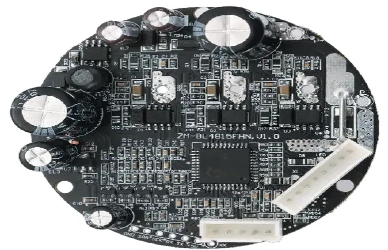
48V DC brushless gear motors are typically used for high-torque, heavy-duty applications. The key benefits of 48V motors include:
High Torque Output: 48V motors can produce significantly more torque compared to 12V or 24V motors, making them ideal for industrial machinery, electric vehicles, and large automation systems that require high force.
Higher Efficiency: 48V motors are more efficient, especially in high-load applications. The higher voltage allows for less heat generation and better performance at higher speeds, which is essential in heavy-duty applications.
Better Performance in Harsh Environments: The robust nature of 48V motors makes them ideal for continuous-duty operations and high-demand environments like robotics, elevators, or heavy machinery.
While 48V motors offer excellent performance, they come with a few downsides:
Higher Cost: 48V systems tend to be more expensive due to the more advanced power management and motor design required.
Complex Power Supply: They require a dedicated 48V power supply, which adds complexity and cost to the overall system design.
For heavy-duty applications that require high efficiency and torque, 48V motors are often the preferred choice. They are ideal for industrial automation, robotics, electric vehicles, and large machinery.
Here’s a detailed comparison of the three voltage options in terms of key performance metrics like torque, speed, and power consumption:
Feature | 12V Motor | 24V Motor | 48V Motor |
Torque Output | Low | Moderate | High |
Speed (RPM) | High | Moderate | Low |
Power Consumption | Lower efficiency under load | Balanced efficiency | High efficiency at load |
Cost | Lowest | Mid-range | Highest |
Ideal Applications | Small robotics, fans, toys | Medium-duty automation | Industrial machines, EVs |
12V motors: Best for lightweight, portable applications that require speed over torque, such as small robots, drones, and portable tools.
24V motors: Suitable for mid-range automation tasks, small industrial machines, and systems where a balance of torque and speed is needed.
48V motors: Ideal for high-torque, heavy-duty applications such as electric vehicles, industrial robotics, and large machinery that require continuous power and high efficiency.
Higher voltage motors, such as 48V motors, can generate more torque and power, making them suitable for heavy-duty applications. Lower voltage motors, like 12V, are typically used for lighter loads and smaller devices.
Yes, 12V motors are the most affordable, while 48V motors are generally more expensive due to their higher performance, power management systems, and better efficiency in heavy-duty applications.
Using a 12V motor in a 48V system is not recommended because it will not provide the required torque or performance. It may also damage the motor or the system due to the power mismatch.
The best voltage depends on the application’s power requirements, load capacity, and efficiency needs. For lightweight applications, 12V motors are ideal, while 48V motors are best for high-performance, heavy-duty systems. 24V motors offer a balance for medium-duty tasks.
Choosing the right voltage for your DC brushless gear motor is critical for achieving the right performance characteristics for your application. 12V motors are cost-effective and well-suited for low-power, portable systems. 24V motors offer a balanced solution for medium-duty applications, providing good torque and efficiency. For high-torque, heavy-duty applications, 48V motors are the best choice, offering superior performance and efficiency at a higher cost.
By understanding the specific needs of your application—whether it's speed, torque, power, or efficiency—you can make the right choice to ensure optimal performance and reliability.


