

close
Choose Your Site
Global
Social Media

Views: 0 Author: Site Editor Publish Time: 2026-03-02 Origin: Site


When selecting a DC brushless gear motor (BLDC), specifying the right torque and RPM is critical to achieving optimal motor performance and efficiency. The right combination of torque and RPM ensures that your motor can handle the required load, perform at the necessary speeds, and operate efficiently within the constraints of your application. This article will guide you through understanding torque and RPM, how to calculate these values for your application, and how to make the right motor specifications for your needs.
DC brushless gear motors (BLDC) are highly efficient, durable, and offer precise control, making them ideal for a wide range of applications. These motors combine the benefits of a DC brushless motor with a gear mechanism—typically a planetary or spur gear system—that reduces the motor’s speed while increasing its torque. Torque, the rotational force produced by the motor, and RPM (Revolutions per Minute), which measures the speed of rotation, are critical parameters that define the motor’s performance.
In industries such as robotics, automotive, and automation, choosing the correct torque and RPM is essential to ensure that the motor can meet specific operational needs and deliver optimal performance.
Specifying the correct torque and RPM for a motor is crucial because these values directly influence how the motor interacts with the load, how precisely it operates, and how efficiently it consumes energy. The ability to balance these two parameters ensures the motor runs smoothly, optimizing system functionality, controlling power usage, and maintaining overall system reliability. Proper torque and RPM specifications enable the motor to perform well in its intended application, maximizing both efficiency and lifespan.
Torque is the rotational force produced by the motor that enables the movement of the load. It is a key factor in determining a motor’s ability to handle mechanical loads in various applications. Torque is measured in Newton-meters (Nm) or ounce-inches (oz-in), depending on the scale of the motor and application.
In DC brushless gear motors, torque is influenced by the motor’s design, including the number of poles, windings, and the gear mechanism. When a gear system is added, the motor can deliver higher torque at lower speeds by adjusting the gear ratio.
The amount of torque needed in an application depends on the load requirements and the mechanical design of the system. For example:
High-torque applications: Motors used in lifting systems, robotic arms, or heavy machinery often need to generate significant torque to overcome resistance and move heavier loads. In these cases, motors with higher torque specifications are required.
Low-torque applications: For less demanding tasks like small fan systems or lightweight conveyors, a motor with a lower torque rating is sufficient.
Torque also affects efficiency; motors that are underspecified in terms of torque may struggle to move the load efficiently, leading to overheating, reduced lifespan, and energy inefficiency. Overspecifying the torque, on the other hand, can increase costs and energy consumption unnecessarily.
RPM (Revolutions per Minute) is a measure of how many complete turns the motor shaft makes in one minute. RPM is crucial because it dictates how fast a motor can rotate and thus how quickly the attached load can be moved. The speed of the motor can be adjusted using different gearing systems.
In DC brushless gear motors, RPM is typically reduced by the gear system, which trades speed for torque. For instance, a motor might rotate at 3000 RPM, but a gearbox can reduce this speed to 300 RPM while increasing the torque by a factor of 10, depending on the gear ratio.
RPM is important for determining the speed of the motor-driven system. However, in high-torque applications, the motor’s RPM will typically be reduced to ensure that more power is delivered to the load rather than just rotational speed.
High RPMs: Motors with higher RPM values are ideal for high-speed applications such as small fans, printers, or other precision tools where speed is more critical than torque.
Low RPMs: For systems requiring precise movement and high torque at low speeds, such as robots or conveyor belts, motors that operate at lower RPMs are required. Lower RPMs allow the motor to exert more torque, making it more suitable for heavy-duty tasks.
It’s important to match the required RPM with the correct gear ratio to achieve both the desired speed and torque for your application.
The load profile of your application will significantly influence the torque and RPM specifications of the motor. If your system involves heavy lifting, fast acceleration, or high resistance, you’ll need a motor capable of providing higher torque at lower speeds. Similarly, applications like conveyors or fans that move lighter loads at higher speeds may require a higher RPM motor.
Factors to consider when determining load profile:
Load weight: Heavier loads demand higher torque.
Movement precision: For precise movements, torque and RPM must be optimized for control.
Acceleration needs: Applications requiring quick start-up may need higher torque at lower speeds.
The efficiency of the motor plays a critical role in achieving the desired performance while maintaining energy consumption within acceptable levels. A high-efficiency motor will use less energy to deliver the required torque and RPM, keeping operating costs low. It’s essential to select a motor that balances power, torque, and speed requirements with efficiency. If the motor operates at an unnecessarily high RPM, it may waste energy by generating excess speed that the application doesn’t require.
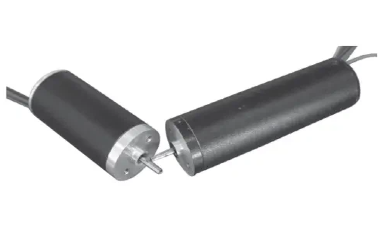
To determine the required torque for your application, follow these steps:
Identify the load force: Understand the weight and resistance of the load that the motor will move.
Calculate the load inertia: Inertia is the resistance of the load to acceleration. This is calculated by multiplying the mass by the distance to the center of rotation.
Determine acceleration: How quickly do you need to accelerate the load? This determines the motor's torque needs.
Account for mechanical losses: Friction and other losses in the system can reduce the torque transmitted from the motor to the load.
The basic torque formula is:
Torque=Force×RadiusEfficiency Factor\text{Torque} = \frac{\text{Force} \times \text{Radius}}{\text{Efficiency Factor}}Torque=Efficiency FactorForce×Radius
When calculating torque, take into account:
Load inertia: The resistance the motor needs to overcome to move the load.
Desired movement: The speed and acceleration at which the load needs to be moved.
Operating conditions: Environmental factors such as friction, temperature, and other mechanical factors that influence torque.
The required RPM for your application can be determined by understanding how quickly the load must move and what speed is required to complete tasks. If your application requires fast operations, a higher RPM is needed. For more controlled, precise movements, a lower RPM is usually better.
Your motor’s RPM is directly affected by the gear ratio. A high gear ratio will reduce the RPM while increasing torque, and a low gear ratio will allow the motor to achieve higher RPMs at the expense of torque. Select the gear ratio that best matches your load and speed requirements.
For example:
Low-speed, high-torque: Choose a higher gear ratio to reduce speed but increase torque.
High-speed, low-torque: Choose a lower gear ratio to allow higher RPM.
Torque directly influences the motor's ability to handle heavy loads and perform tasks like lifting, pushing, or rotating. Higher torque allows the motor to manage heavier loads, providing smoother and more efficient operation.
Selecting too high of an RPM can waste energy and wear out the motor faster, while selecting too low of an RPM may result in sluggish operation or insufficient speed for your system's needs.
While it is possible to adjust some motor parameters, it’s more cost-effective and efficient to get the correct specifications from the start. Adjusting torque and RPM can lead to inefficiency and mechanical strain.
For high-torque, low-speed applications, focus on selecting a motor with a higher torque rating and a lower RPM. Use a high gear ratio to reduce speed while boosting torque, ensuring both efficiency and the ability to handle heavy loads.
When specifying the torque and RPM for your DC brushless gear motor, it’s essential to balance both values based on your application’s needs. Torque determines how much load the motor can handle, while RPM dictates the speed of operation. The right balance will ensure your system operates efficiently and reliably.
By carefully considering the application load profile, calculating the required torque and RPM, and selecting the appropriate motor specifications, you can optimize your motor’s performance. Whether it’s for high-torque, low-speed applications or high-speed, low-torque systems, making the right selection will contribute to the overall success of your application.


