

close
Choose Your Site
Global
Social Media

Views: 0 Author: Site Editor Publish Time: 2026-03-10 Origin: Site


When choosing a DC brushless gear motor (BLDC), one of the most critical decisions involves selecting the right feedback system. The feedback system plays a pivotal role in determining the motor’s performance, accuracy, and efficiency. Two of the most common feedback systems used in BLDC gear motors are Hall sensors and encoders. Both serve the purpose of providing position and speed feedback to the motor controller, but each has unique characteristics that make them more suitable for different applications.
This article will explore the differences between Hall sensors and encoders, their advantages, and the best use cases for each in BLDC gear motors. We’ll also provide insights into when to choose one system over the other, helping you make an informed decision for your motor control needs.
Hall sensors are electronic devices that detect the magnetic field generated by the rotor of a DC brushless motor. These sensors are typically placed at 120-degree intervals around the motor stator to measure the position of the rotor as it turns. As the rotor moves, the Hall sensors detect changes in the magnetic field and send this information to the motor controller, which adjusts the motor’s operation accordingly.
Hall sensors are often used in sensor-based commutation, where the motor controller relies on the feedback from the Hall sensors to determine the position of the rotor and apply the correct current to the motor windings.
Simplicity and Cost-Effectiveness: Hall sensors are relatively simple to implement, which makes them a cost-effective option for many applications. They do not require complex systems and are less expensive than encoders.
Low Power Consumption: Hall sensors typically consume less power compared to encoders, making them a more energy-efficient solution for applications where low power consumption is crucial.
Good for Low-Precision Applications: Hall sensors provide adequate feedback for systems that do not require high precision. They are suitable for low-to-medium precision applications, such as simple robotics, basic automation, and fan control systems.
Compact Design: Hall sensors are smaller and lighter, making them ideal for applications with limited space.
Despite these advantages, Hall sensors have limitations in terms of feedback resolution, and their accuracy is generally lower than that of encoders. This makes them more suitable for applications that do not require ultra-precise control.
An encoder is an electromechanical device that converts the rotational position of the motor shaft into an electrical signal that can be read by the motor controller. Encoders provide much more detailed feedback compared to Hall sensors, offering both position and speed information.
Encoders come in two main types: incremental and absolute. Incremental encoders measure the number of rotations, whereas absolute encoders provide the exact position of the rotor at any given time. This level of precision allows the motor controller to perform more accurate adjustments, providing finer control over the motor’s performance.
High Precision and Resolution: Encoders provide high-resolution feedback, making them ideal for applications requiring high precision and fine motor control. They are perfect for robotic arms, CNC machines, and other systems that require exact positioning.
Better Performance in Complex Systems: Encoders are capable of delivering precise speed and position feedback, which is essential for applications that demand consistent and reliable performance over extended periods.
Flexibility in Application: Encoders are highly versatile and can be used in a wide range of applications, from low-speed systems to high-speed, high-torque applications, where precision is critical.
Higher Reliability: Encoders are more robust than Hall sensors in high-precision environments and can work in more demanding industrial conditions.
However, encoders tend to be more expensive and complex than Hall sensors due to the additional components and the higher level of precision they provide.
The accuracy of feedback is one of the main differences between Hall sensors and encoders. Hall sensors are generally less accurate because they provide limited resolution, typically offering feedback at discrete intervals based on the rotor's magnetic poles. This can lead to some inaccuracies in rotor positioning.
Encoders, on the other hand, provide much higher accuracy and resolution, capable of detecting minute changes in the rotor’s position. This makes them ideal for applications requiring high-precision control, such as robotics, automated machinery, and CNC equipment.
Hall Sensors: Best suited for applications that do not require extremely high precision. These include low-cost systems, small-scale robotics, fans, and basic automation systems where moderate speed and torque control are sufficient.
Encoders: Essential for applications where high speed control, position accuracy, and reliability are paramount. These are typically used in industrial robotics, CNC machines, medical devices, and high-performance automation systems.
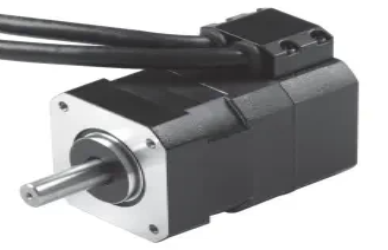
One of the main reasons to choose Hall sensors over encoders is cost. Hall sensors are generally more affordable and simpler to integrate into systems. If your application does not require high precision and you are working with a limited budget, Hall sensors are a great choice.
Hall sensors are suitable for applications requiring moderate precision in speed and position control. They are often used in home appliances, small robots, electric vehicles, and other low-power devices. These motors can operate efficiently with Hall sensors in systems where fine control and high accuracy are not necessary.
If your application requires high precision in both speed and position, an encoder is the optimal choice. Unlike Hall sensors, which offer basic feedback, encoders provide greater accuracy and finer control over the motor's movements. This makes them ideal for applications that demand tight tolerance and exact positioning, such as robotics, CNC machines, automated manufacturing, and high-performance machinery.
Encoders work by providing detailed feedback about the rotor's position, allowing the motor controller to make extremely accurate adjustments. This precision is essential in environments where even the smallest misalignment or error in positioning can lead to system malfunctions or failures. For instance, in robotic arms or automated assembly lines, encoders ensure that each movement is executed with exceptional accuracy, enabling tasks that require complex and delicate manipulations.
Additionally, encoders are often used in high-speed applications where speed control must be extremely precise to avoid issues such as overshooting or undershooting the target position. Their ability to offer fine, real-time adjustments makes them indispensable in systems that demand high performance.
Encoders become essential in more complex systems that require detailed, continuous feedback to ensure optimal performance. These systems rely on the encoder’s ability to provide precise data for fine-tuning motor operations. For example, applications such as high-speed robotics, medical equipment, precision machining, or advanced automation systems rely on encoders for high-resolution feedback that ensures accurate motion control.
In high-performance medical equipment like MRI machines or surgical robots, encoders allow for the exact movement and positioning necessary to maintain patient safety and equipment effectiveness. Similarly, in automated manufacturing systems, encoders provide the real-time feedback needed to make quick adjustments, ensuring processes like 3D printing, CNC machining, or precision assembly are executed accurately and consistently.
As these applications often involve complex tasks requiring continuous and precise motion, encoders provide the resolution needed to monitor every step of the process. Their ability to track and report every minor movement enables smooth operations in systems where error tolerance is minimal, making them a critical component in complex, high-precision environments.
Hall sensors offer basic rotor position feedback with lower accuracy, while encoders provide higher precision and resolution, making them ideal for high-precision applications.
Yes, encoders are typically more expensive due to their higher complexity, precision, and advanced functionality compared to Hall sensors.
Hall sensors are not ideal for high-precision applications because they provide limited resolution. For high-precision control, encoders are the better choice.
Choose Hall sensors for applications where cost-effectiveness and simplicity are important, and where high precision is not critical, such as small robots or simple automation systems.
In conclusion, both Hall sensors and encoders offer distinct advantages, and the best choice depends on the specific needs of your application. Hall sensors are simpler, cost-effective, and ideal for applications where precision is not the primary concern. These sensors provide basic rotor position feedback, making them suitable for simpler systems like small robots, fans, and low-cost automation tasks. However, for high-precision applications, encoders are the superior option, offering much higher accuracy, finer control, and greater resolution. They are crucial in systems where reliability and performance are paramount, such as in robotics, CNC machines, medical devices, and high-speed automation. When selecting a feedback system for your DC brushless gear motor, consider factors like cost, precision, efficiency, and the complexity of your application. For simpler applications, Hall sensors may suffice, while for more demanding tasks, encoders ensure optimal performance. By carefully selecting the right feedback system, you can maximize motor performance, improve system efficiency, and extend the motor's lifespan, ensuring long-term reliability and success.


