

close
Choose Your Site
Global
Social Media

Views: 0 Author: Site Editor Publish Time: 2026-02-24 Origin: Site


DC brushless motors (BLDC) have become increasingly popular due to their high efficiency, low maintenance, and long lifespan. Unlike traditional brushed motors, BLDC motors operate without physical brushes, relying instead on electronic commutation, which reduces wear and tear, thereby enhancing reliability. These motors are particularly important in high torque, low-speed applications, where consistent performance and precision are crucial. In such applications, the motor’s ability to deliver high torque at low speeds without overheating or losing efficiency is essential for the optimal functioning of systems such as robotics, conveyors, medical devices, and automotive applications.
Choosing the right motor is crucial for maximizing system performance and ensuring energy efficiency. A carefully selected DC brushless gear motor not only improves the overall functionality of the application but also reduces the need for frequent maintenance and replacements, leading to lower operational costs. By understanding the specific requirements—such as torque, speed, and gear ratio—engineers can ensure the motor will operate at peak efficiency, meeting the demands of the application while extending the motor’s lifespan.
A DC brushless motor (BLDC) operates without brushes, using electronic controllers for commutation. It consists of a stator (with windings) and a rotor (with permanent magnets). The controller adjusts current to the stator windings, creating a rotating magnetic field that drives the rotor.
High Efficiency: BLDC motors have higher efficiency as there are no brushes creating friction, making them ideal for low-speed, high-torque applications.
Long Lifespan & Low Maintenance: Without brushes, they last longer and require less maintenance, reducing downtime.
Precise Control: They offer excellent torque and speed control at low speeds, essential for applications like robotics and automation.
Low Heat Generation: BLDC motors produce less heat, even at high torque, reducing overheating risks in continuous operations.
Compact & Quiet: They are lightweight and run quietly, suitable for space-constrained or noise-sensitive environments.
To determine the required torque for your application, consider factors such as the load, required acceleration, and mechanical design. The basic formula for calculating torque is:
Torque=Force×RadiusEfficiency Factor\text{Torque} = \frac{\text{Force} \times \text{Radius}}{\text{Efficiency Factor}}Torque=Efficiency FactorForce×Radius
Load: The weight or resistance the motor must move.
Acceleration: The speed at which the load must be moved or accelerated.
Mechanical Design: Any friction or resistance in the system that affects torque requirements.
Ensuring you select a motor with enough torque is critical to prevent motor overload or failure during operation.
For low-speed applications, the motor should provide stable and controlled rotational speed. The required speed (in RPM) depends on the application’s specific needs, such as the speed at which the load needs to be moved.
Speed Calculation: Speed is directly related to the gear ratio, motor type, and power supply. In high torque, low-speed applications, select a motor with a lower RPM (usually below 1000 RPM) and a higher torque output.
Selecting a motor with adjustable speed control or a built-in feedback loop can help maintain a consistent speed under varying loads.
Choosing the correct voltage and power rating ensures that the motor operates efficiently and avoids overheating or instability.
Voltage: Match the motor’s voltage to your system’s power supply. Common voltages for BLDC motors include 12V, 24V, and 48V.
Power: Power is the product of voltage and current. Ensure the motor’s power rating meets or exceeds the demands of the load, allowing for smooth operation without exceeding the motor’s limits.
The gear ratio determines how the motor's output speed and torque are adjusted through the gears. It is the ratio of the number of teeth on the driven gear to the number of teeth on the driving gear. The gear ratio significantly influences motor performance in terms of speed and torque.
High Gear Ratio: Increases torque but decreases speed. This is ideal for high torque, low-speed applications where the motor needs to generate significant force at lower speeds.
Low Gear Ratio: Increases speed but reduces torque. This is useful for applications that require high speed and less force.
For high torque, low-speed applications, a higher gear ratio (e.g., 5:1, 10:1, 20:1) is typically preferred, as it multiplies the torque output from the motor while reducing the rotational speed.
5:1 Gear Ratio:
Torque: Increases motor torque by 5 times.
Speed: Reduces motor speed by 5 times.
Use Case: Suitable for applications where moderate torque is required with a slight reduction in speed (e.g., robotic arms or conveyor belts).
10:1 Gear Ratio:
Torque: Increases torque by 10 times.
Speed: Reduces speed by 10 times.
Use Case: Ideal for applications needing higher torque at low speed, such as electric vehicles or lifting systems.
20:1 Gear Ratio:
Torque: Increases torque by 20 times.
Speed: Reduces speed by 20 times.
Use Case: Best for applications with very high torque requirements and low-speed operation, like heavy-duty industrial machinery or winches.
In high torque, low-speed applications, maintaining motor efficiency and managing heat dissipation are crucial factors. When motors operate at high torque, they tend to generate more heat, especially when running at lower speeds for extended periods. Overheating can reduce motor lifespan, affect performance, and cause potential system failures.
Efficiency: Higher efficiency means less energy wasted as heat, leading to better performance and lower operating costs.
Heat Management: Effective heat dissipation prevents the motor from overheating, ensuring stable operation, reducing thermal stress on components, and maintaining consistent torque output.
When selecting a motor for high torque low-speed applications, it's important to consider the motor’s ability to handle heat:
Cooling Mechanisms:
Internal Fans: Many motors are equipped with internal fans to help circulate air and dissipate heat.
Heat Sinks: Motors with built-in heat sinks or fins increase surface area to release heat more effectively.
External Cooling: For demanding applications, additional cooling systems (e.g., liquid cooling) may be necessary.
Motor Construction:
Material Selection: Choose motors made from high-quality materials like aluminum or copper, which conduct heat better and help dissipate heat faster.
Sealed Enclosures: Motors with sealed enclosures prevent dust and debris from interfering with heat dissipation, keeping the system clean and efficient.
Thermal Ratings:
Ensure that the motor has a suitable thermal rating (e.g., temperature tolerance), indicating it can handle high temperatures without damage. Look for motors rated for extended operation at higher ambient temperatures.
Motor Load Ratings:
Make sure the motor can handle the load without operating at full capacity all the time, as overloading increases heat generation. A motor with a good load margin will ensure that it remains efficient and cooler under extended use.
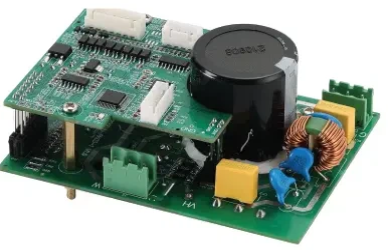
Motor controllers are essential for managing motor startup, stopping, and speed control, ensuring efficient and responsive operation.
Motor Start and Stop:
Soft Start/Stop: Controllers with soft-start features gradually ramp up the voltage, preventing sudden surges of current, which helps protect the motor during high torque, low-speed operation.
Current Limiting: To prevent excessive current draw, modern controllers incorporate current-limiting features, protecting both the motor and power supply.
Speed Control:
Closed-Loop Control: Many controllers offer real-time speed control by adjusting motor input based on feedback (e.g., rotor position), ensuring stable performance under varying loads.
PID Control: Proportional-Integral-Derivative (PID) controllers allow precise speed control, compensating for load changes or voltage fluctuations.
Selecting the right drive is crucial for ensuring smooth performance in high torque, low-speed applications.
High Torque Performance:
The drive must provide sufficient current to meet the high torque and starting requirements, preventing voltage dips or overcurrent.
Efficiency at Low Speeds:
Drives must maintain efficiency at low RPMs, optimizing power delivery to minimize energy loss and heat generation.
Speed Control Compatibility:
Drives should support fine speed adjustments for low-speed applications. PWM control can help fine-tune power delivery for smooth operation.
Regenerative Braking:
For certain applications, drives with regenerative braking can recover energy during deceleration, reducing energy waste and wear on braking systems.
For high torque, low-speed applications, motors need to withstand harsh conditions like dust, moisture, and extreme temperatures.
Dustproof:
Motors with IP54 or higher ratings offer protection against dust, preventing damage from particulate matter.
Waterproof:
For wet environments, choose motors with IP65 or higher ratings, ensuring protection against water jets and moisture.
High-Temperature Resistance:
Motors rated for higher temperatures (up to 180°C) are necessary for environments with high heat, preventing overheating.
IP Rating:
Choose motors with IP54 or higher for dustproof needs and IP65 or higher for waterproof protection.
Corrosion Resistance:
Select motors made from corrosion-resistant materials (e.g., stainless steel) for harsh chemical or marine environments.
Thermal Protection:
Ensure motors have thermal protection features to avoid overheating in extreme temperatures.
Vibration and Shock Resistance:
For applications with high vibrations, choose motors with reinforced housings or dampened components.
Sealed Bearings:
Motors with sealed bearings prevent contaminants and moisture from affecting performance, reducing maintenance.
DC brushless motors offer high efficiency, low noise, and longer lifespan, making them ideal for high torque low-speed applications by avoiding brush wear issues.
The required torque can be estimated by calculating load inertia, acceleration time, and operating environment. It is important to account for the application’s specific needs and safety margins.
The gear ratio determines the motor's speed and torque output. For high torque low-speed applications, a higher gear ratio is typically selected to increase torque and reduce speed.
Thermal performance affects motor efficiency and lifespan. Choose a motor with suitable heat dissipation designs (e.g., aluminum casing or built-in heat sinks) and ensure the motor operates within the appropriate temperature range.
When choosing a DC brushless gear motor, it's crucial to consider key factors such as the required torque, speed, gear ratio, efficiency, thermal management, motor controllers, and environmental protection. Ensuring the motor meets the specific demands of your high torque, low-speed application will significantly enhance system performance and longevity. Selecting the right motor not only improves operational efficiency but also reduces maintenance needs and operational costs. By carefully considering these factors, you can optimize performance, extend the motor's lifespan, and ensure reliable, consistent operation in even the most demanding environments.


